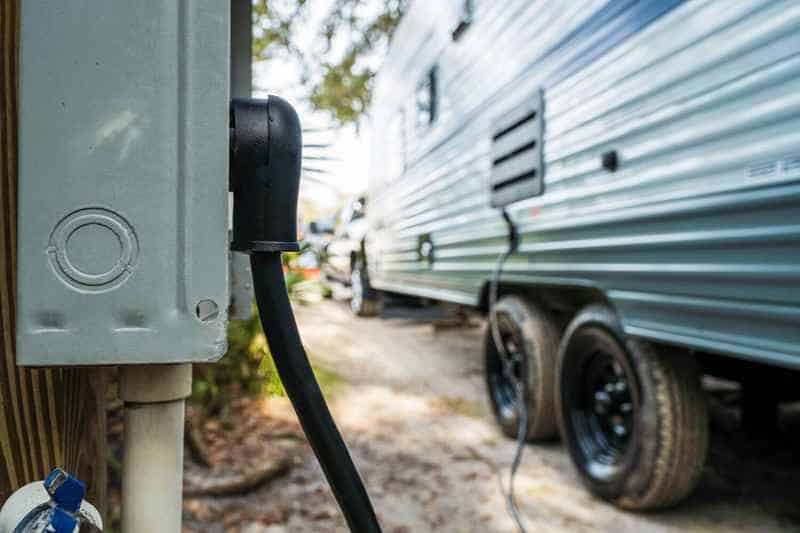
An RV power cord is easy to ignore. It doesn’t sparkle. It doesn’t beep. It doesn’t make camp coffee.
Most of the time, it just sits there doing its job quietly, out of sight and out of mind. That’s exactly why it gets overlooked. Until campground power goes sideways—and it will. When that happens, your power cord, adapters, and surge protection suddenly jump to the top of the importance list.
Campground electricity is unpredictable. Loose connections, low voltage, overheated plugs, and miswired pedestals are common across the USA. Many parks were built decades ago, back when RVs ran a fridge, a few lights, and not much else. Today’s rigs are a different story. Residential refrigerators, multiple air conditioners, induction cooktops, battery chargers, and inverters all pull steady power for hours at a time.
Add summer heat, packed holiday weekends, long extension runs, and even a pedestal that looks fine, and even a pedestal can turn into a weak link.
The warning signs are rarely subtle. Breakers trip. Lights flicker. Air conditioners struggle to start. Sometimes you catch a faint smell of hot plastic and pause, wondering if it’s your imagination. It usually isn’t.
Good power gear doesn’t make campground electricity perfect, but it stacks the odds in your favor. A properly rated RV power cord carries the load safely without overheating. The right dogbone adapters let you connect without stressing plugs or blades. A surge protector monitors voltage, checks wiring, and shuts off power before problems reach your RV’s electronics.
This guide covers the best RV power cords, RV extension cords, dogbone adapters, and surge protectors for real-world camping. Everything here is rated for RV use and chosen with safety, durability, and daily convenience in mind—so you can plug in once, trust the connection, and get on with your trip.
Campground power isn’t consistent—and it doesn’t have to be perfect to cause problems.
The right RV power cord and surge protection catch issues before your rig ever feels them.
How to Choose the Right RV Power Cord
Before buying anything, take a minute to think about how you actually camp—not the ideal version of your trips or how you hope to travel someday. The right power cord depends less on brand names and more on how, where, and how often you plug in.
Start with your service type.
This part is non-negotiable.
If your RV is wired for 30-amp service, you need a 30-amp cord. If it’s 50-amp, you need a 50-amp cord. While dogbone adapters are useful when pedestal options are limited, your main power cord should always match your RV’s electrical system. Using the wrong amp rating forces the cord to work harder than it should.
An undersized cord creates extra resistance. Resistance creates heat. Over time, that heat damages insulation, loosens connections, and stresses your RV’s electrical components. It’s a slow problem that often shows up at the worst possible time.
Consider how often you move camps.
If you change campsites frequently, flexibility matters more than you might expect. Stiff cords are harder to coil, harder to fit back into storage bays, and more frustrating when you’re tired, it’s raining, or daylight is fading.
RVers who move often benefit from cords with softer jackets and molded handles. Those small details make setup and breakdown quicker and reduce strain on the cable and on you.
Think about how long you stay plugged in.
Extended stays put steady, constant stress on a power cord. Heat buildup becomes a real concern, especially during summer when air conditioners, converters, and battery chargers may run around the clock.
For longer stays, thicker insulation and solid strain relief matter more than convenience features. These cords are better equipped to handle continuous loads without degrading or becoming brittle over time.
Check your storage space.
Power cords are bulky, especially rv 50amp power cord models. Before buying, check where you plan to store it. Measure the space and think about how you pack.
A cord that barely fits often gets bent sharply, crushed by other gear, or forced into awkward positions. Over time, that abuse shortens the cord’s lifespan and increases the risk of internal damage.
Choosing the right RV power cord isn’t about getting the fanciest option on the shelf. It’s about picking one that fits your rig, your travel style, and your setup routine—so plugging in stays simple and stress-free.
The best RV power cord isn’t the fanciest one on the shelf.
It’s the one that matches your rig, your travel style, and how often you plug in.
What to Focus On
Correct amp rating
Never downsize. A lower-rated cord heats up faster, especially under sustained load. That heat shortens the life of the cord and can stress your RV’s electrical system. Matching the cord to your service rating keeps the current flowing safely and consistently.
Thick insulation
A heavy outer jacket does more than protect against scuffs. It shields the internal wiring from moisture, UV exposure, and heat buildup. Thin insulation might save money at checkout, but it tends to crack, stiffen, or wear through much sooner.
Molded plug ends
Molded connectors are stronger and more weather-resistant than detachable plugs. They reduce flexing at the point where the cord enters the plug and help keep water out of the connection. Over time, that translates into fewer loose contacts and more reliable power.
Good strain relief
The point where the cord meets the plug takes the most abuse. Every bend, pull, and twist happens there first. Solid strain relief spreads that stress out and prevents internal wires from breaking or loosening.
About cord length
Longer cords sound convenient, but they add weight, trap more heat, and take up valuable storage space. Extra length also means more cable to coil and manage at every stop. Buy the shortest cord that realistically reaches most pedestals you encounter, and carry an RV-rated extension cord for the occasional long run.
The right RV power cord doesn’t feel impressive.
It just works—every time you plug in.
Heat is the real enemy of RV power cords.
Undersized cables, thin insulation, and loose connections all lead to the same result—failure.
Common RV Power Mistakes
Even experienced RVers make power mistakes. Most don’t cause problems immediately, which is why they keep happening—until something fails at the worst possible time.
Using household extension cords
Standard extension cords aren’t built for RV electrical loads. They’re designed for short, intermittent use, not for running air conditioners or battery chargers for hours at a time. Household cords overheat, cause voltage drop, and wear out quickly, even on short runs. If it isn’t rated for RV use and your amp service, it doesn’t belong between your rig and the pedestal.
Leaving cords coiled while powered
A coiled cord traps heat, and that heat has nowhere to escape. Over time, insulation breaks down, plug blades discolor, and internal wiring weakens. Always fully uncoil your power cord and any extension cords before turning the breaker on.
Plugging in without checking the voltage
Campground power isn’t always stable, especially in older parks or during peak seasons. Low voltage is just as damaging as a surge and can slowly destroy air conditioners, converters, and electronics. A surge protector or voltage monitor gives you a quick read before your RV takes the hit.
Most RV electrical problems don’t come from bad luck.
They come from rushing setup, cutting corners, or ignoring early warning signs.
Running adapters without surge protection
Dogbone adapters are useful tools, but they don’t offer any protection on their own. Plugging directly into questionable power without a surge protector leaves your RV exposed to wiring faults, reversed polarity, and voltage swings. Adapters should always be used in combination with surge protection.
Ignoring loose or hot connections
Warm plugs, flickering power, buzzing sounds, or a burning plastic smell are all warning signs. Loose connections create resistance, and resistance produces heat. If a plug feels hot to the touch, shut off power immediately and find the cause before continuing.
Most electrical failures come from rushing the setup or cutting corners. Take an extra minute. Check the pedestal. Uncoil the cord completely. Plug in with intention. It’s far easier than dealing with electrical repairs later.
Best RV Power Cords Overall
These cords work for most campers. They balance flexibility, durability, and price without cutting corners on safety. If you don’t want to overthink this purchase, start here.
Camco PowerGrip Heavy-Duty RV Power Cord
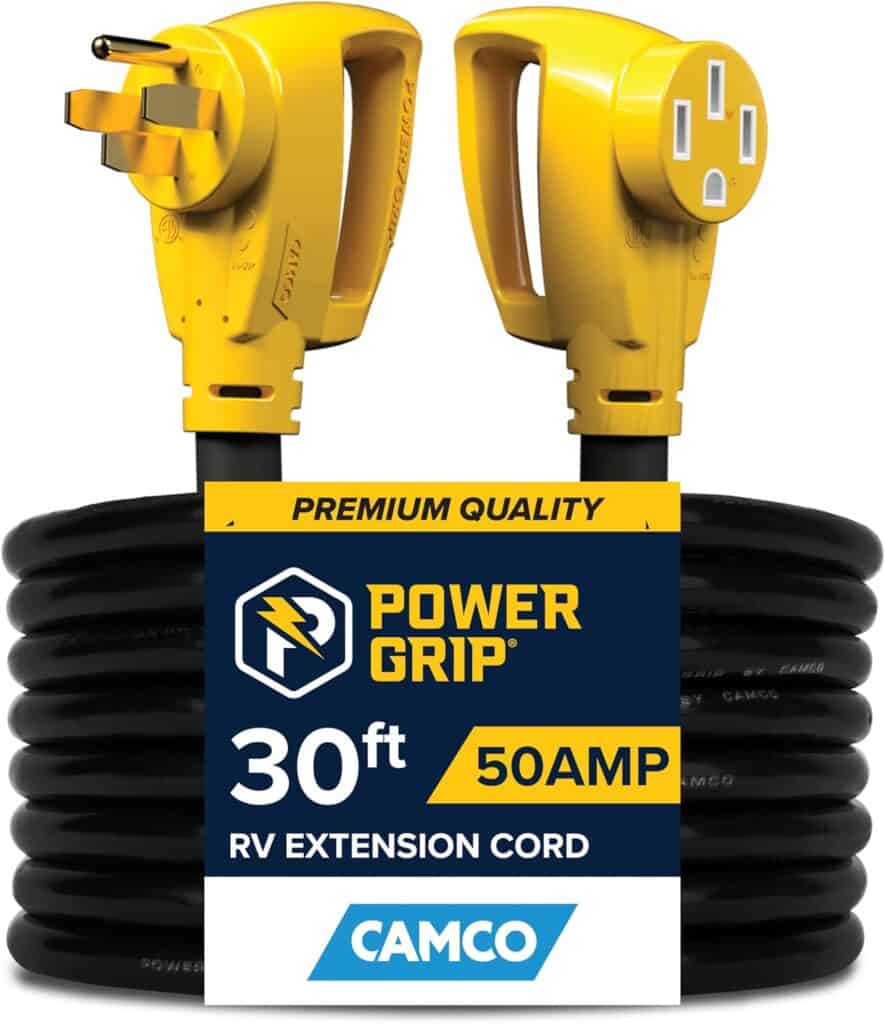
Price: Mid-range
Amp ratings: 30-amp and 50-amp
Lengths: 15 ft, 25 ft, 30 ft
Pros
- Easy-grip molded handle
- Durable PVC jacket
- Widely available
Cons
- Stiff when brand new
- Bulky storage
Who It’s Best For
RVers who want reliable gear without premium pricing.
Why It Works
The PowerGrip handle reduces strain on the cord and your wrists, especially with heavier 50-amp cables.
ParkPower Heavy-Duty RV Shore Power Cord
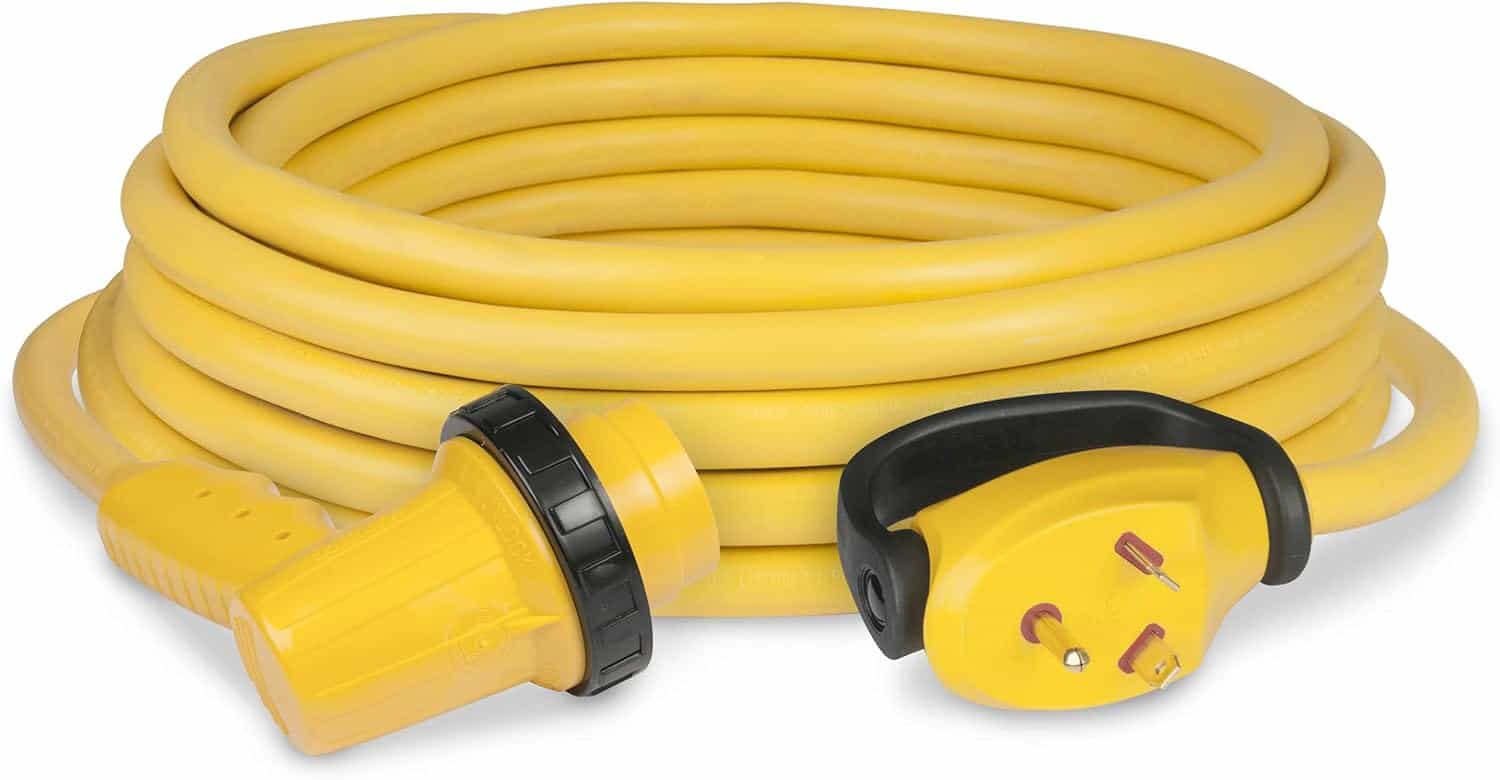
Price: Mid to high
Amp ratings: 30-amp and 50-amp
Pros
- Marine-grade insulation
- Excellent heat resistance
- More flexible than many standard cords
Cons
- Heavier
- Higher cost
Who It’s Best For
RVers who camp frequently or stay plugged in for long periods.
Section Summary
Camco delivers value and availability. ParkPower focuses on durability and long-term performance. Both are solid everyday choices.
A good power cord fades into the background.
If you’re constantly adjusting, unplugging, or worrying about heat, something isn’t right.
Best 30-Amp RV Power Cords
30-amp service is common on travel trailers, pop-ups, and smaller motorhomes. These cords need to handle sustained loads without overheating.
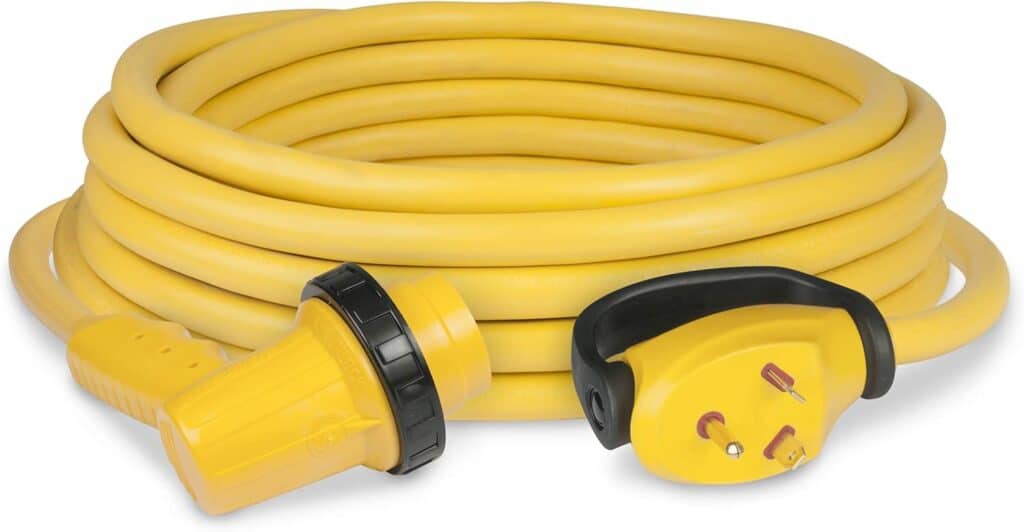
ParkPower 30-Amp Shore Power Cord
Pros
- Handles continuous load well
- Durable, flexible jacket
Cons
- Higher price
Conntek RP5358-030 RV Power Cord
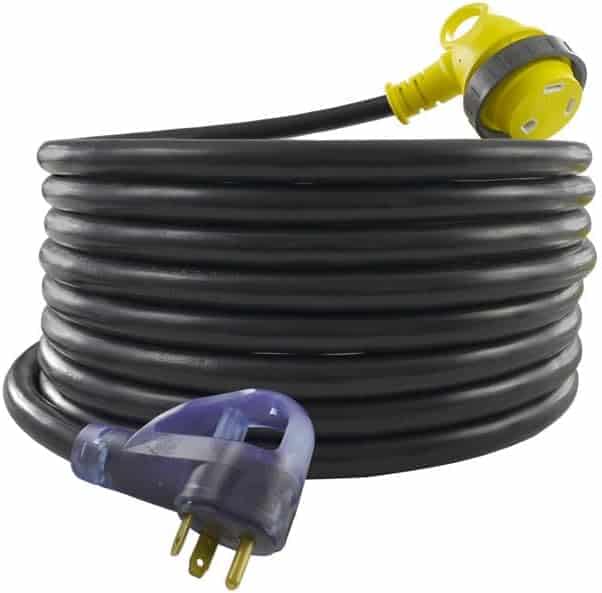
Pros
- Affordable
- Lightweight and easy to store
Cons
- Less flexible
- Shorter lifespan under heavy use
Section Summary
With RV power cord 30 amp versions, insulation quality matters more than length. Overheating is the real enemy.
Best 50-Amp RV Power Cords
50-amp cords carry serious current. Poor-quality versions heat up fast and are miserable to coil.
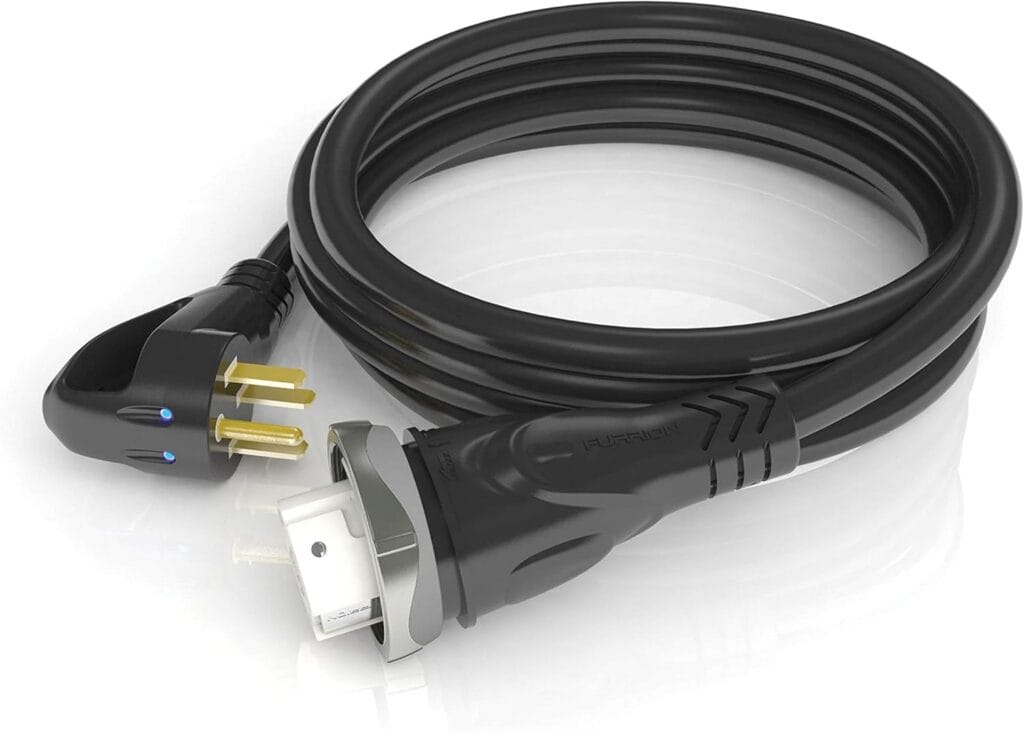
Pros
- Highly flexible jacket
- Easy to handle
Cons
- Premium price
Camco 50-Amp PowerGrip RV Cord
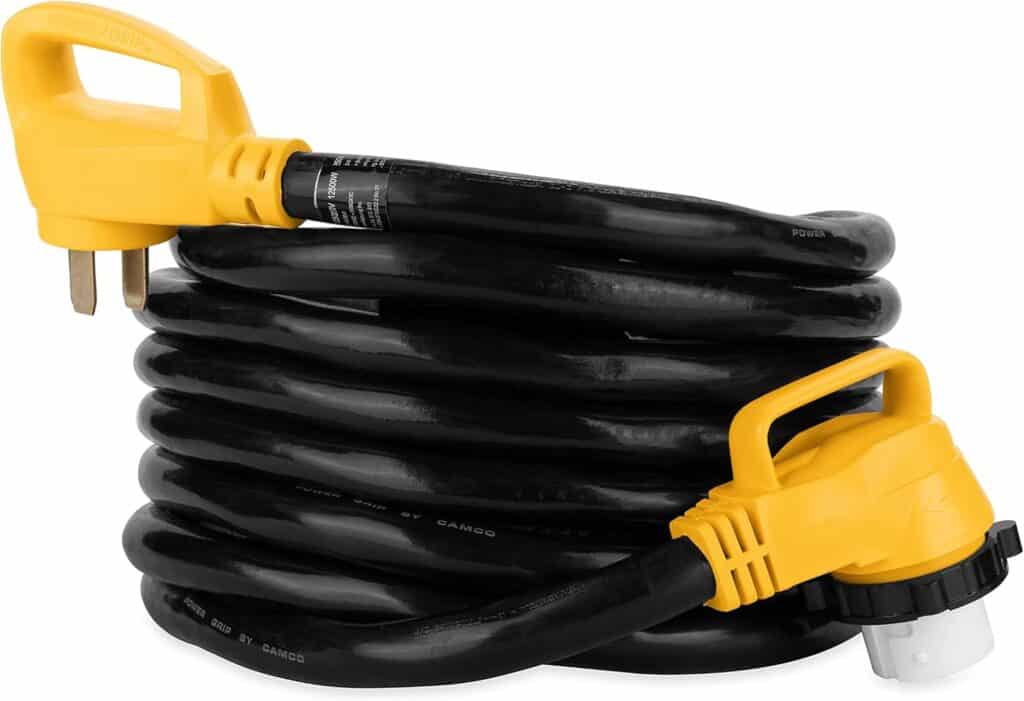
Pros
- Reliable performance
- Good value
Cons
- Stiff in cold weather
Section Summary
Handling and heat control matter more than saving a few dollars with 50-amp service.
Best RV Extension Cords
Extension cords solve distance problems, not power problems. They’re meant to give you a little extra reach when a pedestal is awkwardly placed—not to compensate for undersized cords or poor electrical setups. When used correctly, an RV-rated extension cord is a helpful backup. When used incorrectly, it becomes another heat source.
The key rule is simple: the extension cord must match your RV’s amp rating. Household cords don’t belong here, and neither do undersized cables.
Camco PowerGrip RV Extension Cord
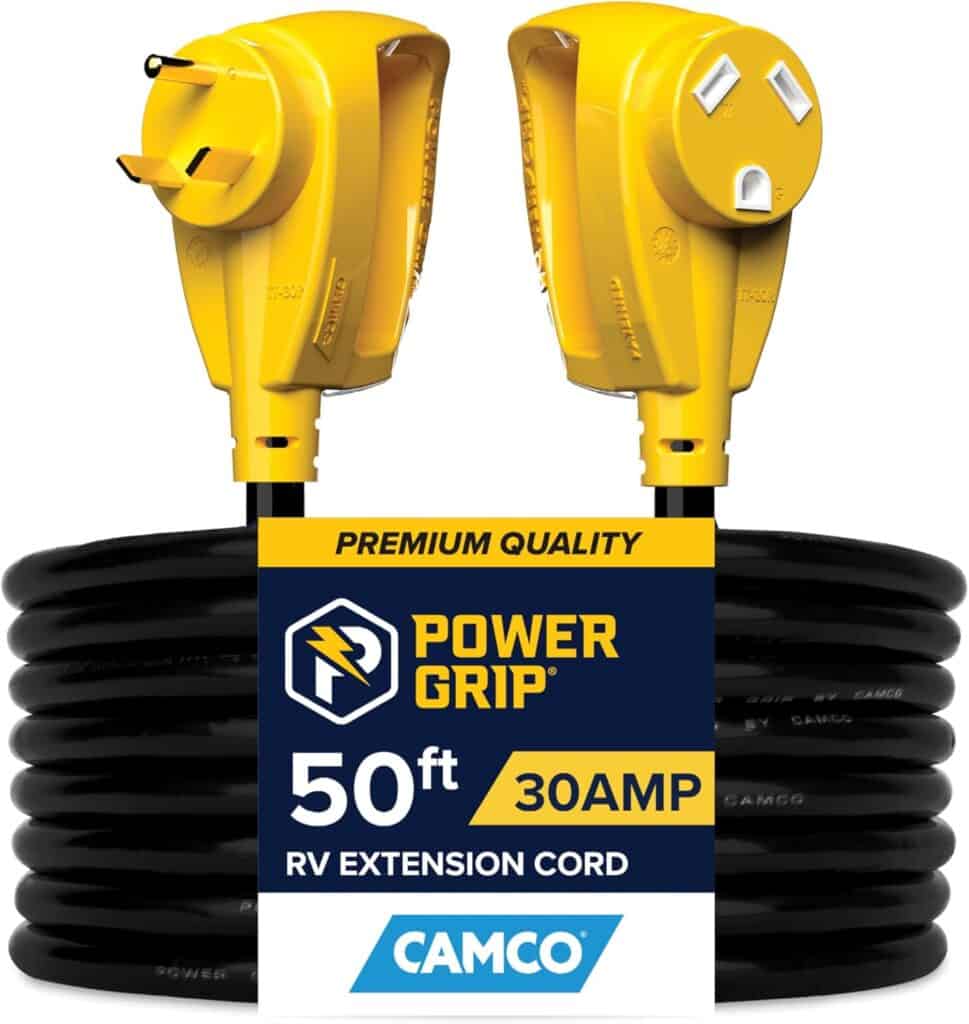
Price: Budget to mid-range
Amp Ratings: 30-amp and 50-amp
Length: 15 ft
Key Features
- RV-rated connectors designed for high current
- Bright jacket for better visibility around campsites
- Molded plug ends with strain relief
Pros
- Affordable and widely available
- Easy to spot at night or in crowded parks
- Reliable connection when properly used
Cons
- Adds another connection point
- Extra bulk to store
Who It’s Best For
RVers who occasionally run into short pedestals or awkward back-in sites and want a dependable, no-nonsense extension cord.
Why It Works
Camco keeps things simple. The cord matches RV electrical demands and avoids the overheating issues common with household alternatives.
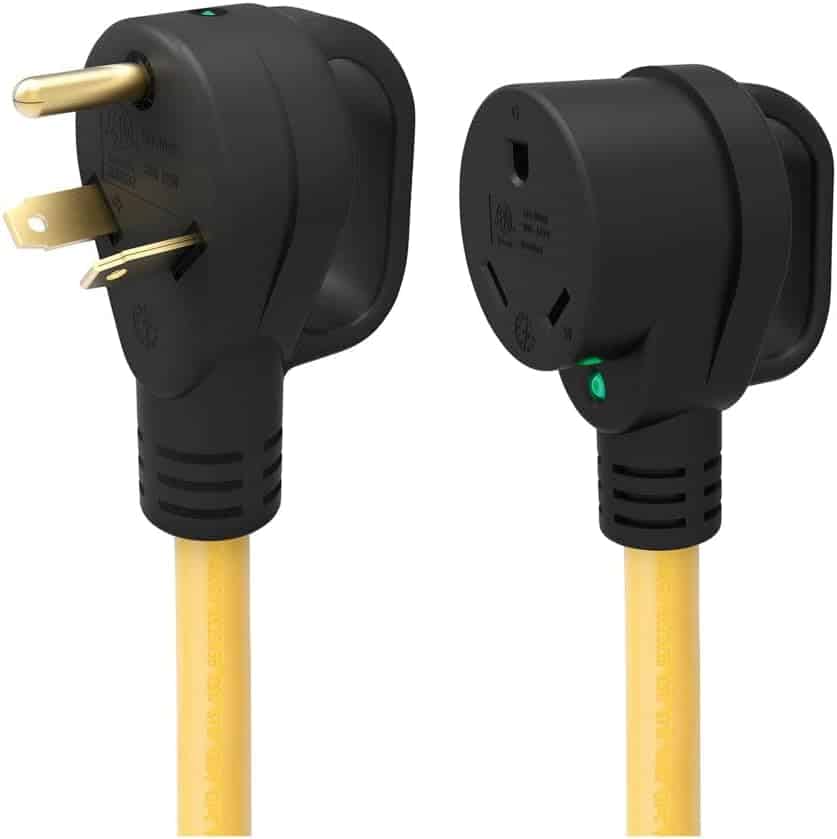
Price: Mid-range
Amp Ratings: 30-amp and 50-amp
Length: 15 ft
Key Features
- Marine-grade cable insulation
- Corrosion-resistant connectors
- Flexible jacket that resists cracking
Pros
- Handles sustained loads better than basic cords
- More flexible in hot and cool weather
- Built for long-term durability
Cons
- Higher price than entry-level options
- Slightly heavier
Who It’s Best For
Campers who stay plugged in for several days or frequently camp in older parks where pedestal placement isn’t ideal.
Why It Works
ParkPower draws on marine electrical standards, which translate well to campground conditions where heat and moisture are constant factors.
Section Summary
RV extension cords are useful tools, but they should be used thoughtfully. Keep runs short, fully uncoil the cord before powering on, and always match the amp rating to your RV. When used sparingly and paired with surge protection, a quality extension cord solves layout problems without creating new electrical ones.
Extension cords solve distance problems, not power problems. Always match the amp rating.
Best Dogbone Adapters
Dogbone adapters let you connect mismatched plugs safely, without stressing your RV power cord or campground pedestal. They’re most often used when plugging a 30-amp RV into a 15-amp household outlet or adapting between 30-amp and 50-amp service.
What adapters don’t do is increase available power. They simply allow a physical connection. That’s why quality, wire gauge, and fit matter more than people realize.
A good dogbone adapter uses short, heavy-gauge cable and solid molded ends to reduce heat and voltage drop at the connection point.
Camco PowerGrip Dogbone Adapter
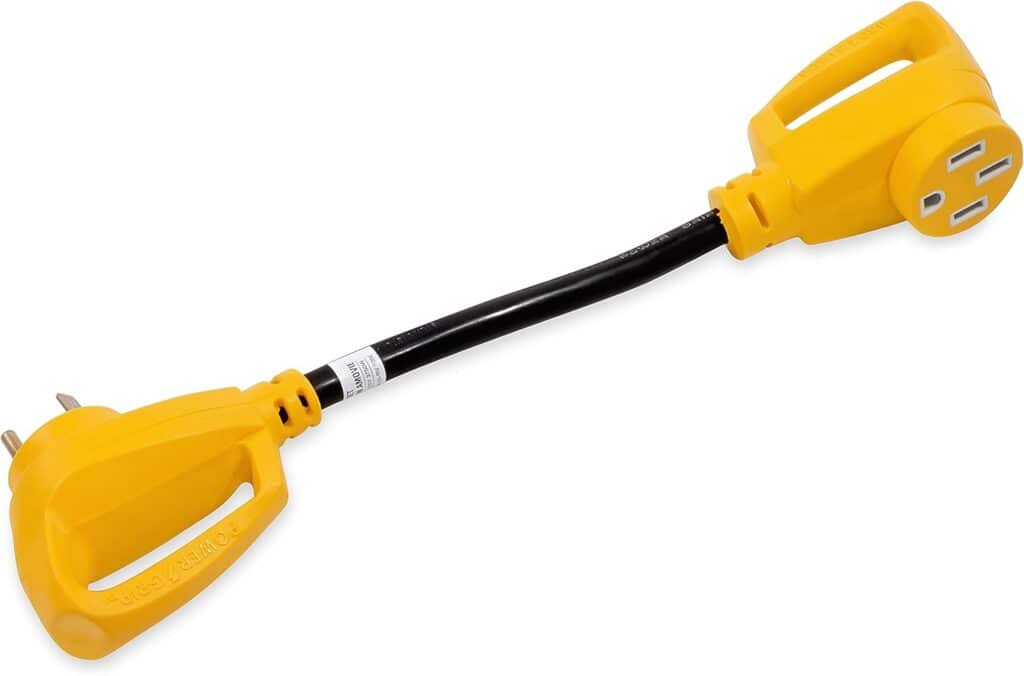
Common Configurations
- 15A male to 30A female
- 30A male to 50A female
Key Features
- Flexible cable section between plugs
- PowerGrip molded handle for easier removal
- Clearly labeled ends
Pros
- Easy to plug in and unplug
- Reduces strain on the pedestal and cord
- Widely available
Cons
- Short cable length
- Can warm under heavy load
Who It’s Best For
RVers who frequently use household outlets, older campgrounds, or mixed-service parks.
Why It Works
The short cable section relieves stress at the plug and keeps connections from loosening, especially on worn pedestals.
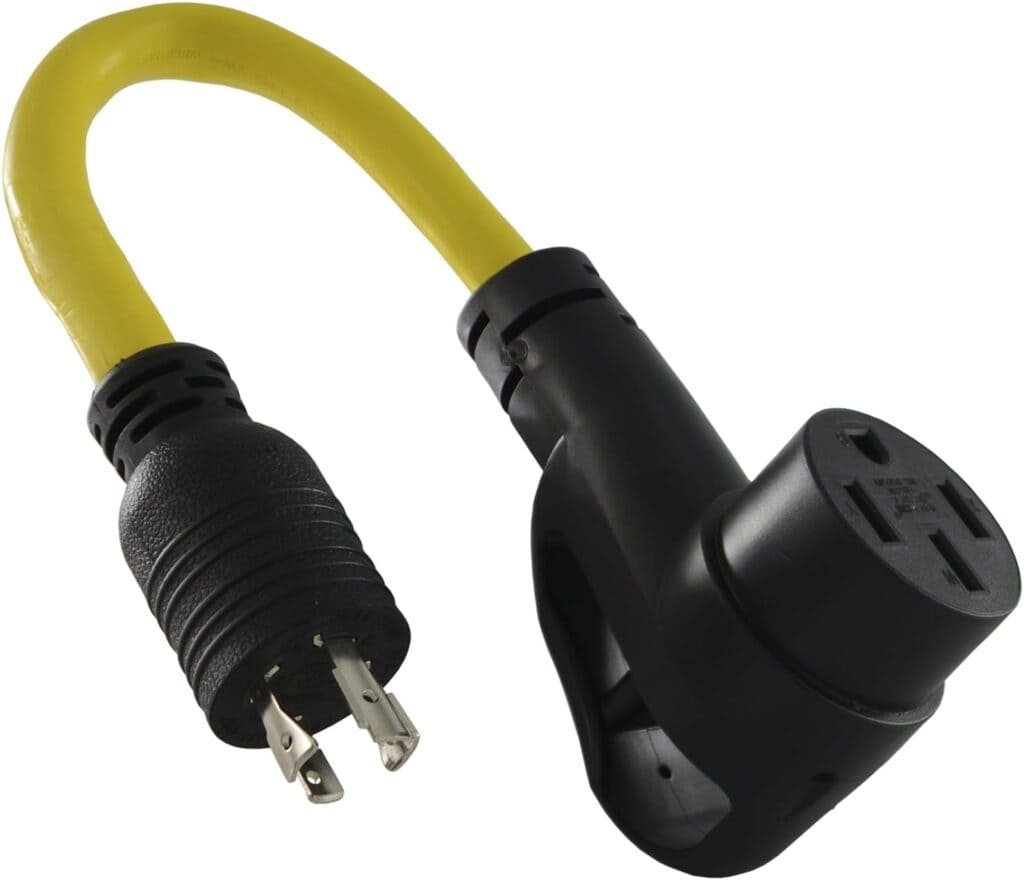
Common Configurations
- 15A male to 30A female
- 30A male to 50A female
Key Features
- Heavy-gauge internal wiring
- Compact molded design
- Straightforward, no-frills construction
Pros
- Affordable
- Easy to store
- Reliable electrical connection
Cons
- No grip handle
- Less flexible than cable-style adapters
Who It’s Best For
Occasional campers, backup use, or RVers who want a simple adapter without paying extra for ergonomic features.
Why It Works
Conntek focuses on solid electrical performance. Fewer extras, but dependable conductivity when used correctly.
Section Summary
Dogbone adapters are small, inexpensive, and easy to overlook—until you need one. They won’t give you more power, but they let you connect safely when pedestal options are limited. Carry at least one adapter that matches your RV’s service, and always pair it with surge protection to prevent your electrical system from being exposed to wiring faults.
Best RV Surge Protectors
Surge protectors do far more than block lightning strikes. In everyday camping, their real job is to monitor voltage, detect wiring faults, and shut off power before damage occurs. Low voltage, reversed polarity, open grounds, and power spikes are far more common than dramatic storms—and they’re just as dangerous to your RV’s electrical system.
A good RV surge protector acts like a gatekeeper. If campground power isn’t safe, it simply doesn’t let it through.
Hughes Autoformers Power Watchdog Surge Protector
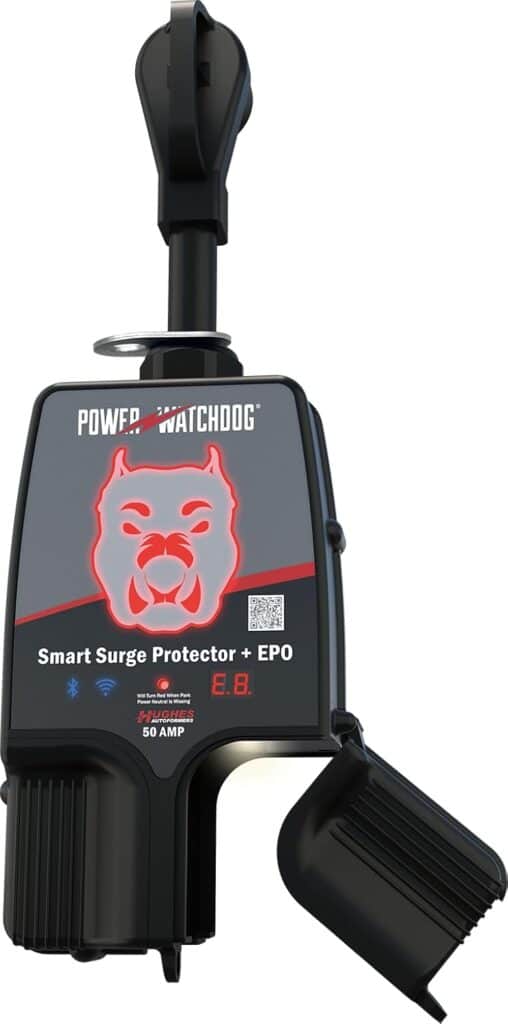
Price: Mid to high
Amp Ratings: 30-amp and 50-amp
Key Features
- Real-time voltage display
- Automatic shutoff for unsafe conditions
- Bluetooth monitoring on select models
Pros
- Easy-to-read display
- Quick setup and clear diagnostics
- Strong protection for most RVs
Cons
- Bulky housing
- Costs more than basic surge guards
Who It’s Best For
Most RVers who want solid protection without installing a hardwired system.
Why It Works
The Power Watchdog gives immediate feedback. You can see voltage at a glance and know right away if a pedestal has issues—before your RV feels them.
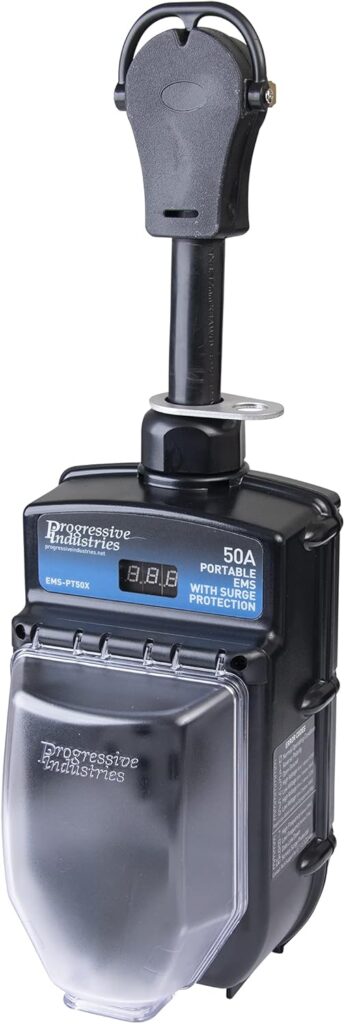
Progressive Industries EMS-PT30X / EMS-PT50X
Price: Premium
Key Features
- Full electrical management system
- Protection from high and low voltage
- Diagnostic error codes for wiring faults
Pros
- Industry benchmark for RV protection
- Extremely reliable long-term performance
- Comprehensive fault detection
Cons
- Higher price
- Larger footprint
Who It’s Best For
Full-time RVers, frequent travelers, or anyone with expensive electronics and appliances onboard.
Why It Works
Progressive Industries units don’t just block surges—they actively manage power. If conditions aren’t right, the system shuts down automatically and reconnects only when it’s safe.
Section Summary
Surge protection isn’t optional if you camp regularly, especially in older or crowded parks. These devices protect against everyday electrical problems that slowly damage appliances and electronics. Compared to the cost of replacing an air conditioner, converter, or control board, surge protection is a small, one-time investment that pays for itself quickly.
Surge protectors don’t just guard against lightning.
They protect your RV from everyday voltage problems you’ll never see until damage is done.
Frequently Asked Questions About RV Power Cords
Can I use a household extension cord for my RV?
No. Household extension cords aren’t built for RV electrical loads. They’re meant for short, light-duty use, not for running air conditioners, converters, or battery chargers for hours at a time. Even short runs can cause overheating and voltage drop, which can damage appliances. Always use RV-rated power cords and extension cords that match your amp service.
Should I unplug during storms?
If you’re using a quality surge protector, you’re protected from most power issues caused by storms. That said, unplugging during severe weather is never a bad idea if it’s safe to do so. Safety should always come first.
How often should I replace my RV power cord?
There’s no fixed schedule. Replace it if you notice cracked insulation, loose plug blades, discoloration, or repeated overheating. A well-made cord can last many years if it’s stored properly and not abused.
Should my RV power cord feel warm?
A slightly warm cord can be normal under load, especially in hot weather or when multiple appliances are running. A hot plug, soft insulation, or discoloration is not normal. Heat usually points to a loose connection, damaged plug, or undersized cable. If something feels hot, shut off the power and inspect it.
Is it okay to stay plugged in full-time?
Yes, as long as you’re using a properly rated RV power cord and a quality surge protector. RV power cords are designed for continuous use. The bigger risk comes from unstable campground power, not from staying plugged in itself.
Do I really need surge protection at newer campgrounds?
Yes. Newer pedestals can still have wiring issues, improper grounding, or voltage fluctuations—especially during busy weekends. Surge protectors don’t just protect against lightning strikes; they monitor voltage and shut power off when conditions aren’t safe. New doesn’t always mean reliable.
Electrical protection is cheaper than electrical repair.
One solid setup can save thousands in appliance replacements.
Final Thoughts
RV power gear doesn’t show off. It just quietly keeps things running. When campground power is good, you barely notice it. That’s the best-case scenario. When it’s bad, you see fast. Flickering lights, tripped breakers, overheated plugs, and appliances that suddenly stop working can derail a trip quicker than bad weather or a missed reservation.
The right setup changes that experience. A dependable RV power cord, the right dogbone adapters, and a surge protector that shuts power down when something’s wrong take most of the uncertainty out of plugging in. You stop guessing whether a pedestal is safe. You stop wondering if that faint plastic smell is “normal.” Your RV is protected before you even flip the breaker.
Good power gear also saves time and frustration. You plug in once. You don’t fiddle. You don’t reset breakers at midnight. You don’t spend the first evening troubleshooting instead of unwinding.
Buy solid gear once. Carry the adapters you actually need. Use surge protection every time you plug in. Then forget about the outlet entirely and get back to why you’re there—relaxing outside, sleeping comfortably, and enjoying the trip rather than managing electricity.